Enterprise
Digital Twin
-
Problem
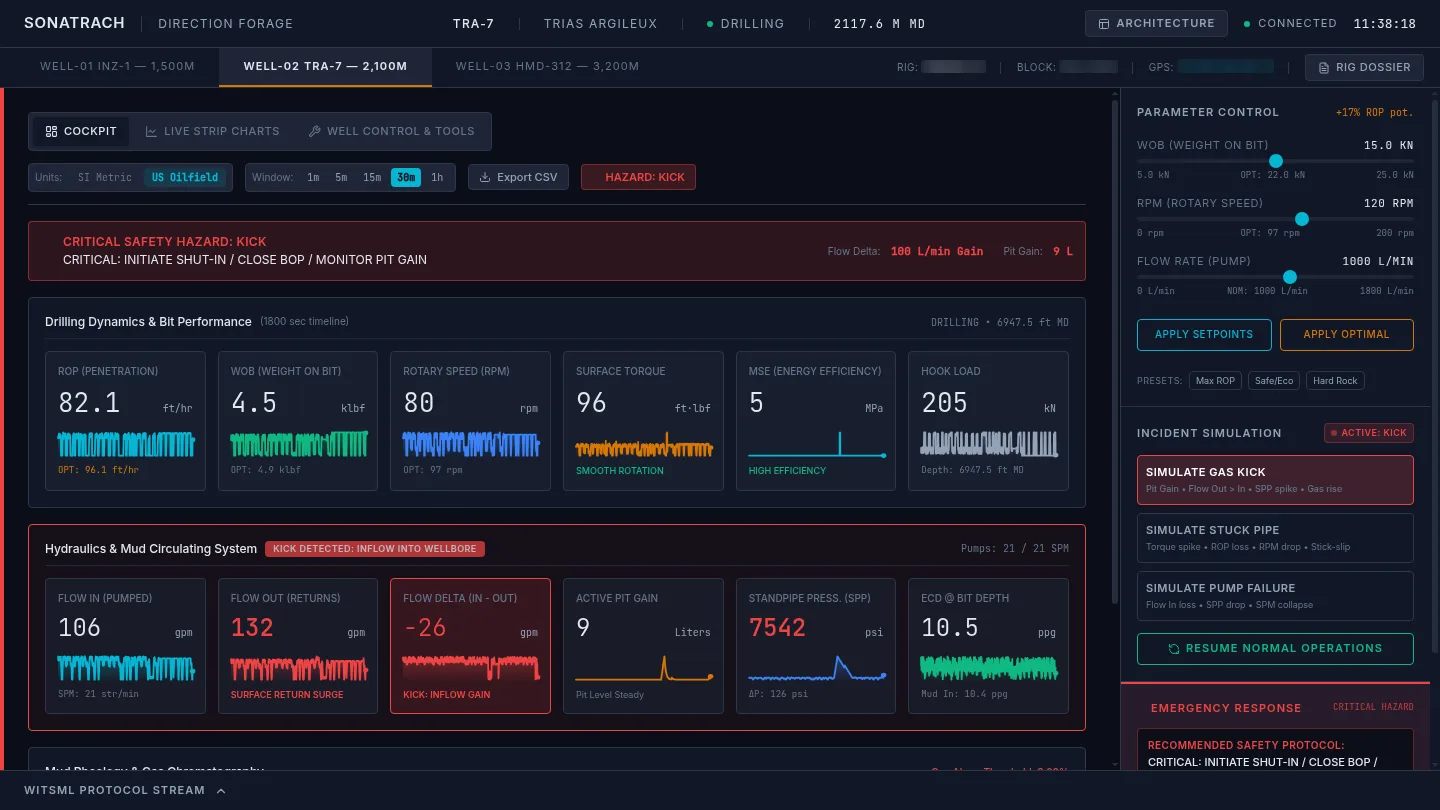
On deep exploration rigs, hundreds of downhole and surface sensors emit telemetry continuously (standpipe pressure, torque, mud flow, gas chromatography). Historically, field operations relied on lagging shift reports and fragmented logs. When a critical anomaly occurs — gas kick, drill pipe sticking, or pump failure — every minute of delay threatens millions in lost bottom-hole assemblies or catastrophic well blowout risks.
-
Approach
Discarding passive monitoring dashboards in favor of a real-time digital twin powered by a high-throughput Go backend. The engine ingests raw WITSML/binary rig telemetry with zero intermediary bloat, executes transient hydro-mechanical physics checks, and streams computed states via low-latency WebSockets. Two dedicated AI models operate concurrently: a real-time ROP optimizer that maximizes penetration without tool damage (+20% ROP), and a Bayesian anomaly detector intercepting micro-deviations minutes before surface alarms trigger.
-
Delivered Architecture
High-concurrency Go ingestion core engineered to process 50 Hz telemetry over degraded satellite uplinks with zero memory leak. Client cockpit built on our proprietary lightweight JavaScript engine with hardware-accelerated 60 FPS Canvas/WebGL rendering for multi-track engineering strip charts without frame drops. Automated IADC Well Control kill sheet calculator generating dynamic kill mud schedules immediately upon gas kick detection.
EDGE layer
Rig site
shared_physics.py
sensor_mechanical
sensor_hydraulic
sensor_gas
sensor_mud_depth
×3 wells = 12 containers
Mosquitto MQTT
Aggregator
Gateway
CORE layer
Processing center
Mosquitto MQTT
Parser / Kafka
Apache Kafka
Consumer
InfluxDB
Grafana
AI module
Isolation Forest
ROP Optimizer
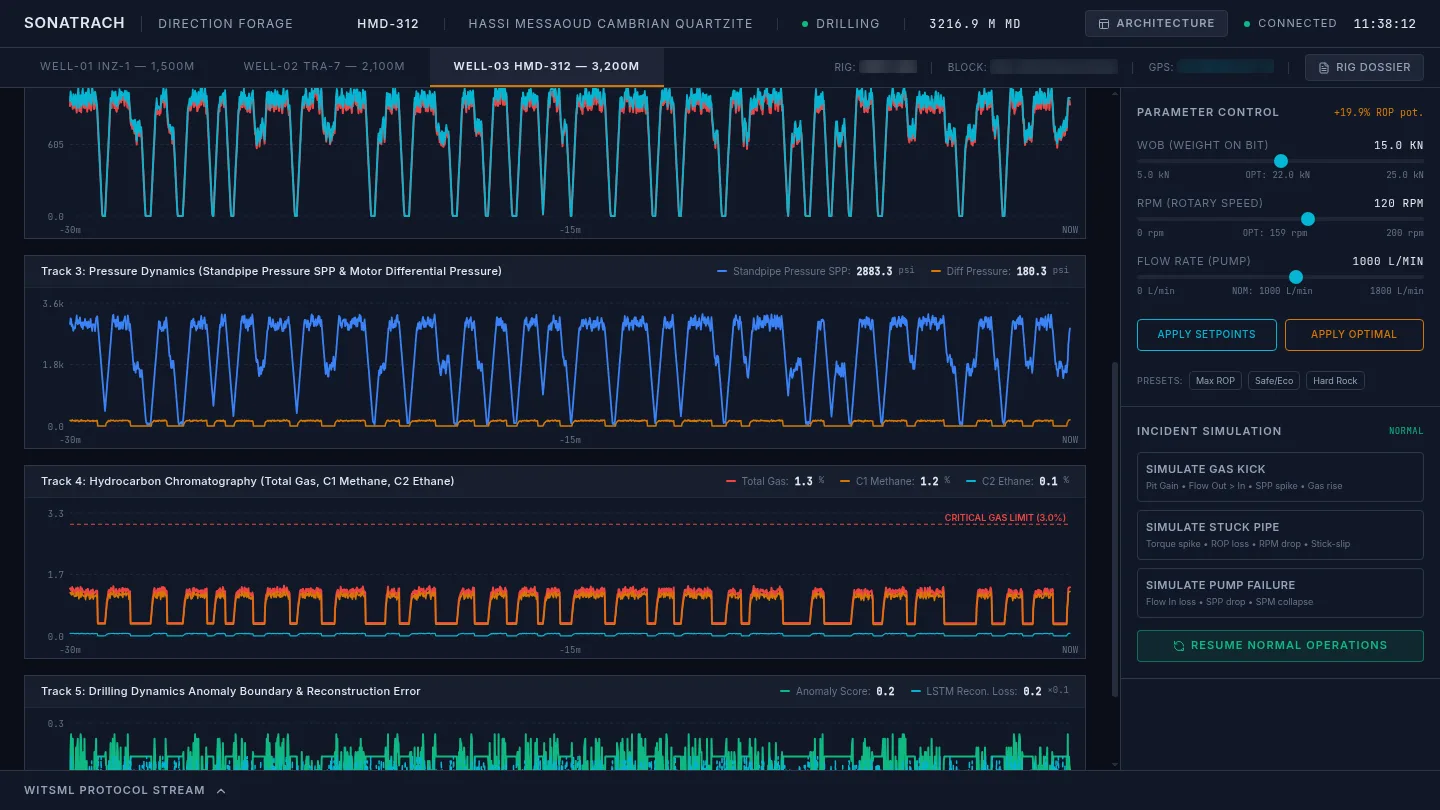
02 Drilling cockpit — real-time curves